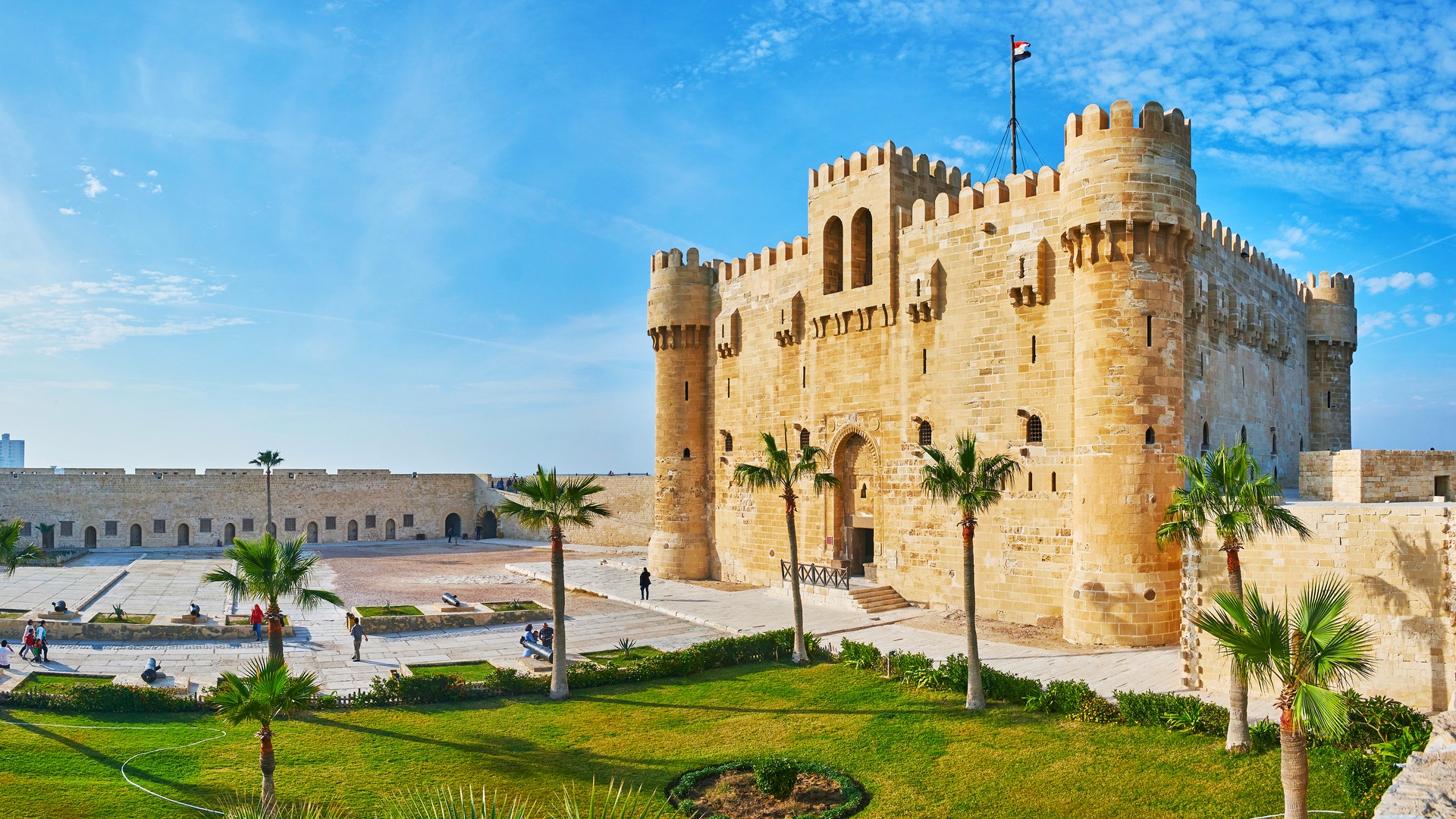
Giza Pyramids
Giza Pyramids
On the Giza Plateau, the Pyramid of Khufu remains the only one of the Seven Wonders of the Ancient World still standing. Complete visitor guide near Cairo.
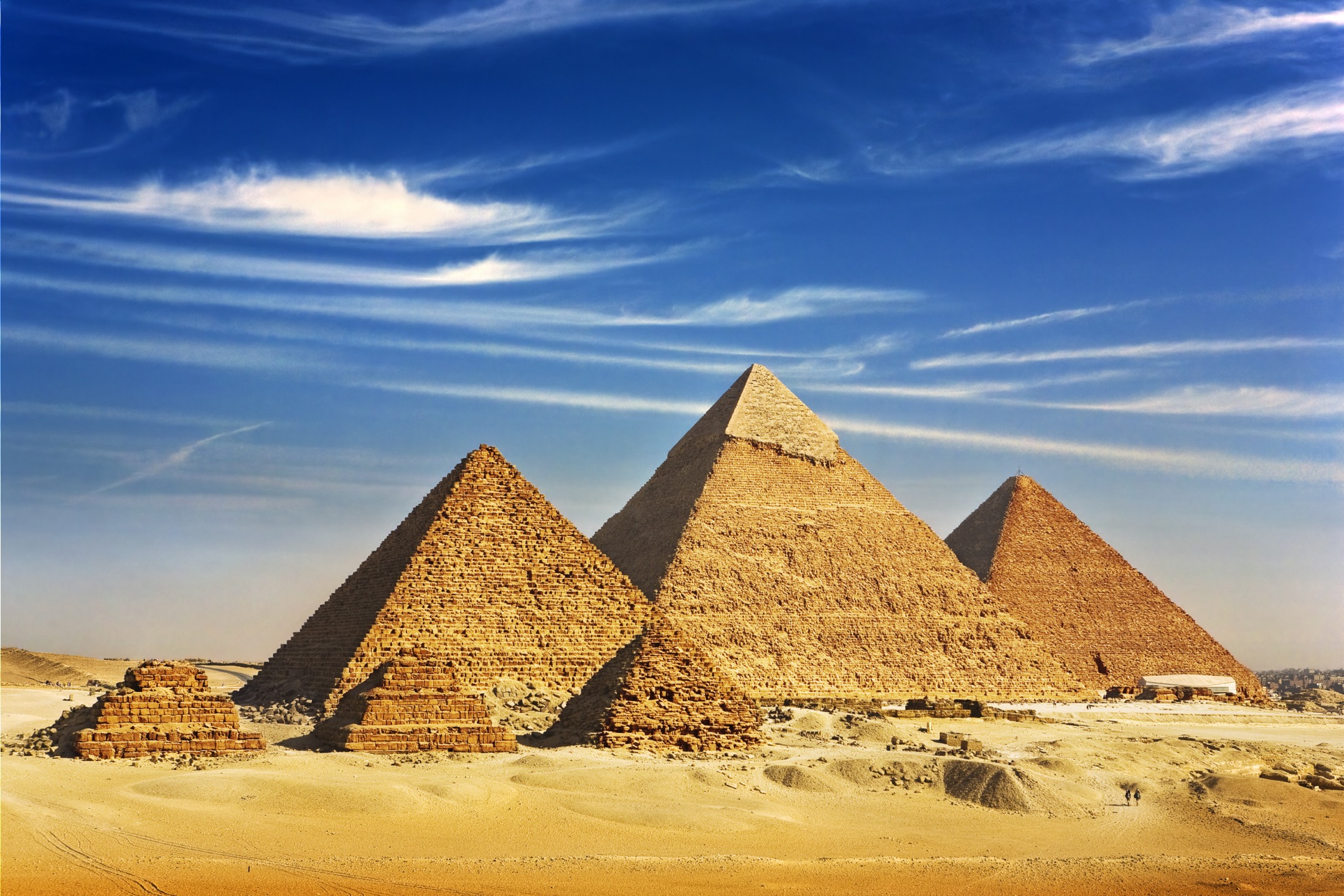
On the Giza Plateau, on the southwestern edge of Cairo, three pyramids have dominated the desert for more than four millennia. The largest, attributed to Pharaoh Khufu, remains the only one of the Seven Wonders of the Ancient World still standing. Together with the pyramids of Khafre and Menkaure, the Sphinx, and several subsidiary temples, the site forms Egypt's most visited funerary complex.
Why visit the Giza Pyramids
The plateau concentrates within a few square kilometers a masterpiece of Old Kingdom Egyptian funerary architecture. Three main reasons motivate a visit:
- See with your own eyes the only ancient wonder still standing, whose dimensions are truly appreciated only at the foot of the monument.
- Enter inside the Pyramid of Khufu through the Al-Mamun opening, a rare experience among the world's archaeological sites.
- Take in the pyramids, the Sphinx, the Solar Boat Museum, and the subsidiary necropolises all at once.
The site is located about twenty kilometers from central Cairo, making it a feasible half-day excursion from the capital.
Site History
The Great Pyramid of Khufu was built around 2560 BCE, during the Fourth Dynasty. Khufu was the son of Sneferu, himself a great pyramid builder (Meidum, Dahshur) and conqueror of Nubia. The techniques developed during his reign enabled his successor to reach even greater heights.
The construction lasted nearly 23 years and required approximately 100,000 stone blocks per year. Contrary to a long-held belief, contemporary archaeological research (excavations of the builders' village by Mark Lehner) attributes the project to paid laborers and seasonal peasants in compulsory service, housed and fed on-site, rather than to enslaved workers.
Over the centuries, the funerary cult of Khufu faded and the pyramid was progressively stripped. During the Arab conquest, its fine Tura limestone casing, which gave it a smooth and brilliant surface, was dismantled to build medieval Cairo. In the 9th century, Caliph Al-Mamun made an opening in one of its faces hoping to find treasures: it is through this opening, called the Al-Mamun breach, that visitors enter the monument today.
What to See on the Plateau
Inside the Pyramid of Khufu
Access is through a narrow, low corridor about thirty meters long, where humidity increases as light decreases. No hieroglyphics or symbols decorate the interior walls, which distinguishes Khufu from the later royal tombs in the Valley of the Kings.
The passage opens onto the Great Gallery, a corbelled space whose ceiling reaches nearly 8 meters high and whose width allows two people to walk side by side. Further on, the antechamber with portcullises housed the closing mechanism that was meant to seal the burial chamber after the king's funeral.
The burial chamber itself measures approximately 10 meters by 5 meters. It still contains the pharaoh's granite sarcophagus, reduced to a large stone box without a lid, long since damaged by plunderers.
Other Monuments
- Pyramid of Khafre: the second largest, recognizable by its limestone casing still preserved at the summit.
- Pyramid of Menkaure: the smallest of the three great pyramids, accessible inside when open to the public.
- Great Sphinx of Giza: monumental statue with a lion's body and human head, carved from bedrock.
- Solar Boat Museum: collections relocated to the Grand Egyptian Museum following its relocation; verify before your visit.
- Satellite pyramids of the queens, mastabas of nobles, and temples connected to the pyramids by processional causeways.
Practical Information
- Ticket Office: one entrance ticket grants access to the plateau; visits inside the pyramids (Khufu, Khafre, Menkaure) require additional tickets, sold in limited daily quotas.
- Duration of Visit: allow 3 to 4 hours for a complete tour of the plateau, longer if you enter multiple pyramids.
- Hours: daily daytime opening with closure in late afternoon. Hours vary by season; better to check the day before.
- Tips: bring water, a hat, and closed-toe shoes; the inside of the pyramids is narrow, hot, and not recommended for people with claustrophobia or heart conditions.
When to Visit
The plateau is exposed in open desert with no shade. The months of October through April offer the most comfortable conditions, with daytime temperatures between 18 and 25°C. From June to August, midday heat can exceed 38°C: it is then preferable to arrive at opening or aim for late afternoon.
To avoid tour group crowds, favor opening hours in the morning or weekdays outside Egyptian school holidays. The sound and light show in the evening offers another approach to the site once the heat drops.
How to Get There
The plateau is located approximately 20 km from central Cairo, on the west bank of the Nile.
- Taxi or Ride Service: the simplest solution from downtown, especially via apps like Uber or Careem that set the price in advance.
- Public Bus: lines 355 and 357 depart from Tahrir Square, near the Egyptian Museum, and drop passengers near the plateau. Modest fare but longer journey.
- Organized Tour: most Cairo agencies combine Giza with Saqqara and Memphis on the same day.
Nearby Attractions
The site complements a broader archaeological stay in Egypt:
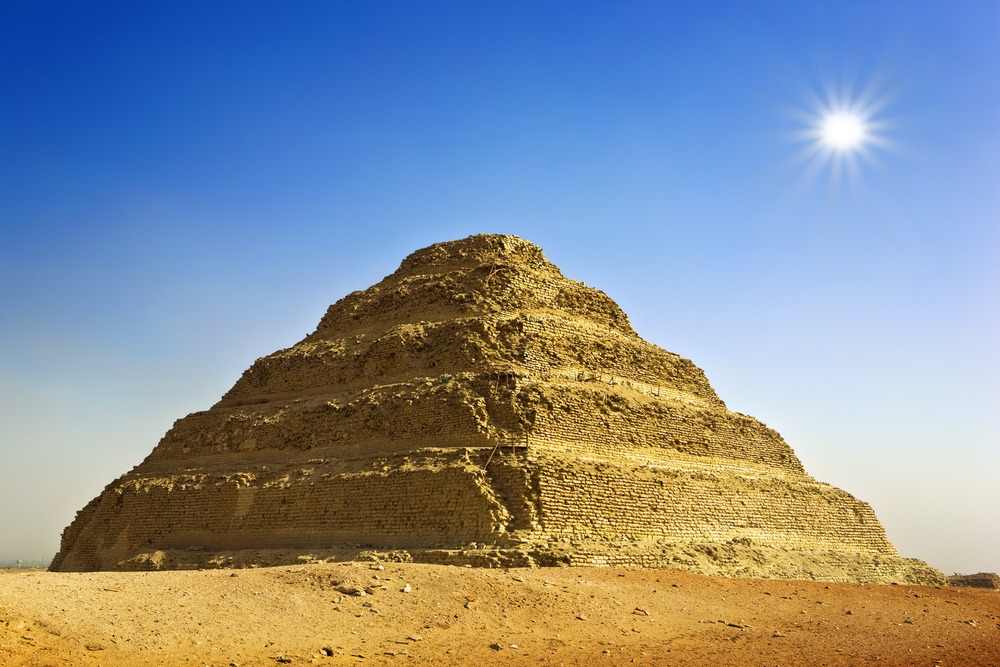
- Pyramid of Djoser at Saqqara, Egypt's oldest pyramid, about thirty kilometers south.
- Temple of Karnak and the tomb of Horemheb in Luxor, to understand the evolution of funerary architecture after the Old Kingdom.
- Temples of Aswan and Abu Simbel Temples in the south of the country.
Frequently Asked Questions
Frequently asked questions
Plan Your Trip
The Giza Pyramids naturally integrate into a larger circuit between Cairo, the Nile Valley, and Upper Egypt. To build your custom itinerary, consult our Egypt trips.
Nearby
Interested in this visit?
We can include it in your personalised itinerary.